

Alex Trenoweth’s Research on Lunar Phases Featured by Astrology News Service
September 1, 2025
A Return to Bath: Memories, Friends & Astrology
September 10, 2025
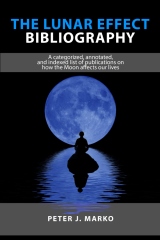
This paper on astrology research was first presented at the IVC conference in 2018, where it contributed to my being awarded an honorary PhD by the Krishnamurti Institute of Astrology. It was later peer-reviewed and published in the Astrological Association’s journal Correlation in 2019. The peer reviewers offered valuable suggestions to strengthen the work, and I am grateful for their input. Since publication, the paper has also been cited in Peter Marko’s Lunar Effect Bibliography, highlighting its contribution to the wider field of astrology research.
Please note: this page is currently under construction. The article is published here in its main text form, but the footnotes and additional formatting will be added soon.
Interested in how astrology research connects to real-life education and practice?
 Explore my books and courses here.
In this interview with David Cochrane, I discuss my research published in Correlation. The video thumbnail even shows the table of p-values from the study, a reminder that astrology research can be approached with rigorous, testable methods.
Can adolescent behaviour be influenced by lunar phase?
Abstract
This is an investigation on the possible relationship between adolescent behaviour and lunar phase. The data used in this investigation is from a school in the UK whose behaviour policy stipulates that teachers record incidents of poor behaviour on an educational application. Over the course of two separate academic years, the total number of reported incidents was 9943 which a much larger sample than J. Wilde’s report on a similar topic in 2008. On casual analysis by the researcher, the data showed that pupil behaviour was worse at the new moon rather than the full moon, as would be expected by communal reinforcement. Further analysis showed that poor behaviour peaked when the new moon was at higher celestial latitudes, rather than low latitude moons when eclipses happen and when astrologers might expect poor behaviour. There is no gender divide which might be expected by astrologers. This is also in clear direct contradiction to the results of studies on human behaviour, with about half of the studies consulted that there is no significant correlation between lunar phases and accidents, suicides and crime rates. Studies on sleep cycles show that humans experience a loss of sleep during the full moon and therefore sleep better during the new moon phase. It is hypothesized that adolescents, who experience a disturbed sleep pattern are better rested during the new moon and therefore have more energy to misbehave. Teachers may also have more energy to record poor behaviour during the new moon. The implications of these findings could be used to improve school behaviour strategies in the education of adolescents by targeting times when intervention is most needed. The results suggest there is a need for further study over a longer term of time.
Introduction and rationale for this research
The researcher has been a teacher of adolescent pupils (ages 11-18 years of age) for sixteen years. In her role in educational management there was responsibility for drawing up reports based on records kept on pupils noting poor behaviour. There had been many casual comments from teachers (and others) assuming that pupils tend to behave in a more rowdy manner during the full moon phase. These assumptions seemed to be based on communal reinforcement about the full moon. Is there an element of truth to cultural mythology? The researcher wanted to investigate the findings of other studies on accidents, suicides and crimes based on phases of the moon.
Casual observation, based on cursory examination of data entries made by teachers reporting poor behaviour, seemed to indicate there may be a contradiction between cultural assumptions about the full moon and reality. The researcher, being an astrologer, wished to organize the data in such a way as to investigate if there could be a correlation between phases of the moon and an increase/decrease in poor behaviour.
More complete preliminary data (which was calculated by a designated information and technology specialist who had no interests in astrology) also seemed to show that poor behaviour peaked at the new moon, which was again in complete contradiction to the assumptions made about human behaviour and the full moon. What could account for this contradiction? And could there be a difference in the number of incident sheets recorded by gender?
The researcher was aware that the circadian cycles of sleep were different to those of an adult. There needed to be further research on whether or not an adolescent was likely to experience sleeping disruptions during the different phases of the moon.
Finally, the researcher wanted to investigate whether different latitudes of the moon could show a correlation with times of poor behaviour. As the moon moves above and below the ecliptic, perhaps different celestial latitudes of the moon could account for the contradiction.
Cycles of the moon, including latitude, are predictable and therefore such correlations could be useful in organizing behaviour management strategies in secondary schools.
Methodology
Data was collected from an educational application called Capita SIMS. All members of staff, irrespective of position, can access this for information stored on all pupils (date of birth, parental contacts, academic progress, attendance, behaviour, achievements, ethnic and religious origins, timetables, etc.). The potential database for this project was massive (over 20,000 entries) and so, to make it more manageable, it was reduced to a single academic year (September 2012 – July 2013) of 8,000 entries. A second academic year (September 2009 – July 2010) was added as a means of comparison, as this gave a different cohort of children in the school. The effects would be compared by percentage and then further results would be assessed through investigating the latitude of the moon.
The effects of a high latitude moon was also considered: high node versus low node, i.e. whether syzygy (the generic name for Full and New moons) was near or far from the nodal axis, => large or small lunar latitude. So this investigation has focused on two different lunar-monthly cycles: Moon phase of 29.5 days (synodic month) and the draconic (nodical) cycle of 27.2 days (NB this is not the same as the sidereal orbit-period, despite their period being quite similar). The celestial latitude of the moon goes up to five or six degrees north and south of the ecliptic each month, then reaches zero latitude when it crosses over the ecliptic. That happens twice a month, and the moon is then conjunct its node, the two nodes North and South node: for the purpose of this study the researcher made no distinction between them, just as the researcher would have made no distinction between north and south celestial latitude. Lunar latitude is totally separate from lunar phase, except that twice yearly they come together in the ‘eclipse seasons’ when eclipses can happen.
The school has a clear behaviour policy with guidelines on what constitutes poor behaviour and how such behaviour should be recorded on the SIMS application. There is no analysis on whether or not the incident sheets are recorded in line with school policy. It is assumed that if the school is using the data, then it must be in line with their own policy.
This data is used by the school to produce reports in order to offer a bespoke education to all pupils, which is in line with UK government regulations. From the reports, intervention strategies are decided. This can often mean pupils with no academic or behavioural concerns are ignored. For the preliminary research, the reports used were calculated and distributed by a designated information and technology professional each half term. For the behaviour reports, there was a distinction made between the different types of behaviour, the age, gender of the pupil and the date the behaviour entry was made by members of staff. The graphs produced were generated by the school but were available to me (and others) as a member of the leadership team. The strength of this data was that personal bias was removed.
The latitude of the moon had to be added to the data by the astrologer after the preliminary reports had been separated by lunar phases. Again, there is no personal bias in this.
For the data for this project, I created my own data reports for the purpose of examining the number of behaviour sheets recorded for male and female pupils on the new, first quarter, full and last quarter moons. For each date Solar and lunar celestial longitudes were obtained, and the sun-moon angle found: such that New moon was zero and Full moon, 180° Roughly each lunar quarter lasted one week, but exactly it was 90° of sun-moon angle. The syzygy positions (Full and New Moon) were centred on these 90° sectors. The figure shows this. Thus the Full Moon quadrant spanned 135° to 225° of Sun-Moon angle. One could choose to use a smaller arc e.g. 60° in some future study.
There was no consideration of age or type of behaviour. Only gender and date of issue for the reports were taken into consideration. The numbers of incident sheets were then divided according to dates and then calculated to determine at which of the moon phases the behaviour occurred. A noon time was arbitrarily taken, for those days on which the demarcation-points fell.
To investigate whether gender could show a correlation between behaviour and lunar phases, the behaviour of boys (who have far higher incidents of poor behaviour overall) and girls was separated.
At the time of data collection, the astrologer was in a position of management in charge of monitoring the behaviour data of one academic year group. Because of this position, the astrologer had access to and an interest in the data outside of astrological interests. It was only after the astrologer had left the post that it was realized that there might be enough information to analyse whether or not the phases of the moon had an effect on behaviour.
It must be noted the data from this school is completely anonymised.
Literature Review
Astrologers tend to see the full moon as a time of high energy. For example Molly Hall, who is called an “astrology expert” on astrology.about.com writes: of the new moon: “When the Moon is new, the Luminaries — the Sun and Moon — are aligned in the same Zodiac sign. That makes it a charged time with concentrated energies of that sign. A New Moon is a symbolic point of attention, and a symbolic portal for new beginnings.”
Whilst it would be erroneous to expect every astrologer to interpret new and full moons in the same manner, one would be hard pressed to find an astrologer who doesn’t attribute any significance to the major lunations. This researcher’s experience with regards to the effects on the lunar phases and behaviour, is that it demonstrates communal reinforcement, i.e. schoolteachers will discuss such effects. In fact it was a casual remark from a fellow teacher about pupil behaviour and the full moon that triggered off this research project.
The literature on lunar effect research is divided. Outside of astrology, the full moon has long been linked to crime, suicide, mental illness, disasters, accidents, birth rates, fertility, among other things such as lycanthropy. Attempts to prove or disprove the lunar effect are ample but the results of the research is divided.
In comparing the number of behaviour reports, one obvious influencing factor between the genders in adolescence could relate to the menstrual cycle. A 1986 study found that among 826 female volunteers, aged between 16 and 25 years (with a normal menstrual cycle), “a large proportion of menstruations occurred around the new moon (28.3%), while at other times during the lunar month the proportion of menstruations occurring ranged between 8.5–12.6%; the difference was significant (p<0.01).”
Further, this has not stopped organisations using the cycles of the moon to prevent crime. For example, in 2007 several police departments in the U.K. even added officers on full-moon nights in an effort to cope with presumed higher crime rates. The article does not indicate if this has been effective in crime prevention.
However, not all studies have concluded that the phases of the moon have nothing to do with tragic events here on earth. A.L Lieber’s (1978) study on aggressive behaviour in Dade County Florida gathered data from police files on aggravated assaults, medical examiner reports on suicides and fatal accidents and hospital records on psychiatry referrals from emergency room visits all showed lunar correlations with variance on lunar phase. Homicide and aggravated assault clustered around the new and full lunations. Correlations between the suicide curve with both fatal traffic accidents and aggravated assault suggests a component of self-destruction.
Other studies have shown similar results by taking into account that fatal accidents were more likely to occur when there is a new or full moon and the accident happens at the weekend. It would seem other variables occurring only at the weekend of the new and full moons affected the outcome of the study.
Owen et al (1998) concluded that: “No significant relationship was found between total violence and aggression or level of violence and aggression and any phase of the moon.” Further, other studies (Little et al, 1987; Durm et al, 1986) have failed to demonstrate any relationship between lunar phase and disruptive behaviour in mental hospitals.
It would seem that it would be very difficult indeed to find a reliable and/or significant correlation between the phases of the moon and adolescent behaviour. Could perigees and apogees of the moon have an effect on human behaviour?
A study conducted in Canada in 1973 found that females were significantly (p<.05) more likely to self-inflict injuries by poisoning during the first quarter cycle of the moon and less likely to do so at the third quarter of the lunar cycle. The study also found that males did not show lunar periodicity (p<.025). However, overall the study found that “a significant correlation between periods in which a large number of self-inflicted injuries occurred and the apogees and perigees of the moon, was found (p<.005).”
However, a 1985 investigation on a lunar-aggression hypothesis and the number of aggressive penalties awarded over the course of a season for an ice hockey team was found: “Interpersonal aggression was found to be unrelated to either the synodic or anomalistic cycles, a result consistent with recent reviews of lunar research.” One reason the moon has less of a clear effect on human behaviour could be the fact that 21st century humans are more unaware of the cycles of the moon with our roofed homes and artificial lighting compared to 150 years ago when both of these factors would have been absent. But even without physical observation, could there still be a lunar effect on humans?
A possible answer to this question seems to be dependent on the effects of sleep deprivation. Röösli et al. (2006), found that people slept a mean of 19 minutes less on nights with a full moon compared with a new moon. More recent studies by Cajochen, et al. (2013), have shown that the phase of the moon affects the human sleep cycle. “We have evidence that the distance to the nearest full-moon phase significantly influences human sleep and evening melatonin levels when measured under strictly controlled laboratory conditions, where factors such as light and personal moon perception can be excluded.”
So could this fact alter the effects of the lunar phases on adolescent sleeping patterns? And in turn, could this be the key in explaining the differences in behaviour during the different phases of the moon? Award-winning sleep expert Mary Carskadon has found that the sleeping patterns in adolescence varies greatly, causing sleep deprivation. She indicates that “the effects of inadequate sleep are more than mere annoyances: they affect our mood and how we perform at school, work, and home and behind the wheel. Lost sleep also accumulates over time; the more “sleep debt” an individual incurs, the greater the negative consequences,” (Carskadon and Dement, 1981; Wolfson and Carskadon, 1998). Twenty minutes may not seem like a lot of lost sleeping time but this is particularly important to adolescent behaviour as that age group already suffers from a disturbed circadian cycle.
A survey by Wolfson and Carskadon of 3,120 high school students across four public high schools self-reported that their total sleep time increased by up to one hour at the weekends but decreased by 40-50 minutes during the school week. Whilst this survey did not take into account the phases of the moon, it demonstrates how the sensitive circadian cycle is prone to disturbances. And thus could be affected by the light of the full moon according to Röösli, et al. It would appear that more sleep may mean that pupils have more energy to get into trouble. It could also mean that teachers have more energy to record poor behaviour.
Results Data
 7944 school punishments from an East London Secondary School 6081 from boys only 1863 from girls only Collected by: Ms A. Trenoweth, Head of Year Administered over the period: September 2012-July 2013 (190 academic school days) Weekday pattern: Fewer detentions given on Fridays The investigation: Can adolescent behaviour be influenced by lunar phase?
Method: The data was divided arbitrarily into four segments each of more or less two thousand (A, B, C & D) for analysis. This was done for convenience of analysing the data and has no particular significance. As explained, lunar quarters were measured by Sun-Moon angle, centred on the Full and New moons, 0-180 degrees. The diagram shows the eight sectors of the circle which are implied by such a fourfold division. Three axes or dimensions were investigated: (1) Full moon versus New (2) boy-girl (3) high node versus low node (i.e. whether syzygy was near or far from the node axis, as would give a large or small lunar latitude). T
here was no time of day information for when the events happened, so the Sun-Moon angle is only accurate within several degrees. All the data was sorted by Sun-moon angle 0-360⁰ and thereby grouped into the four sectors. Results – total number of Discipline cases over one academic year, vs lunar phase Lunar phase
A B C D Totals New Moon 575 533 545 568 2221 1st Quarter 451 430 514 495 1890 Full moon 483 478 473 477 1911 3rd quarter 487 560 467 408 1922 NM/FM difference 19% 34% 15% 19% 16% totals 1996 2001 1999 1948 7944
Because I am not predicting anything in advance, I thought a chi-square test was inappropriate for this set of data. However, a chi-square test would reveal that the deviation from chance distribution is extremely significant: p = 3.9E-08. Summary: New Moon quarters scored more than Full Moon quarters. They also scored 16% more than the rest of the month combined. II. Waxing versus waning Moon: referring to the diagram, the ‘waxing Moon’ is the two-week period 0-180⁰, then the ‘waning’ period follows on after 180-360⁰. During the waxing period the Moon is seen to be growing in the sky then while waning it decays. No difference was found in the data. III. Boys only – 77% of data was male.
Selecting only the dates when punishment or discipline was administered to boys, and again arbitrarily grouping them into four parts for data-analysis, then grouping by Sun-Moon angle:
Lunar Quarter Moon phase A B C D TOTAL NM Quarter 473 409 415 410 1707 1st Quarter 366 330 386 377 1459 Full Moon 377 330 346 361 1414 3rd Quarter 399 436 346 320 1501 NM/FM Diff. +25% +14% +20% 14% Totals: 1615 1505 1493 1468 6081 There was a slightly smaller difference found for girls, but overall this gender effect was not significant. IV. Moon furthest from ecliptic, in celestial latitude (This happens when the Moon is at 90⁰ to the lunar node axis). Twice yearly, as explained earlier, syzygy will coincide with the lunar node axis at the ‘eclipse seasons.’ Around these months of the year, New Moons will occur close the ecliptic, i.e. they will be of low celestial latitude. Three months later, they will be far from it. The eclipse seasons were then falling in May and November We selected for a large lunar latitude at syzygy (Full & New Moon), such that the angle between Sun and nodal axis was greater than 60⁰. Twice each year, the Sun moves 60⁰ – 120⁰ away from the node axis, i.e. from either of the lunar nodes. Thereby we select about one-third of the data. For this selection-process the Sun-node angle was measured. A B C D New Moon quarter 188 201 122 221 1st Quarter 161 135 86 137 Full Moon 99 109 204 133 3rd Q 100 132 161 119 Totals: 548 577 673 610 NM/FM difference: 90% 84% -40% 66% => 34% overall.
This extra-large effect is for that one-third of the year when New moons happen ‘at high latitude’ i.e. far from the ecliptic. It is a counter-intuitive result – one could expect the low-latitude New moons (when eclipses happen) to be more influential.
This node effect would really need testing over maybe a ten-year period. The present result is here offered as being suggestive and worthy of further study.
The earlier 2009 sample was smaller (the school then being smaller), just 1300 cases
total
New Moon quarter 370
1st Quarter 330
Full Moon 259
3rd Q 340
Totals: 1299, NM/FM difference 43%
This was the second data-set analysed, and it therefore tests the hypothesis which became evident in the 2011-2012 data set. We may perform a significance test upon it, which gives chi-square of 4 for the New moon and 12 for the Full moon, quarters, suggesting a significant result.
Discussion
The results for 2012-2013 are counter-intuitive to popular belief and previous studies that focused on the full moon. There is an indication that pupils are more likely to be in trouble at the new moon rather than at any other time of the lunar cycle. Further, at the higher latitude (the moon furthest away from the earth), this effect is liable to be stronger: suggesting higher latitude new moons being more influential than others. This pattern was replicated from the 2009 data (although the total number of entries were fewer owing to lower enrolment).
The results are also in contradiction to when astrologers might expect poor behaviour (during eclipses). As yet, this study showed no significant differences in the results when the genders are separated. Again, this would be a surprise to astrologers who would expect girls to be more affected by lunar phases than boys.
These cycles are predictable and if teachers are open to them, strategic interventions can be put into place to cope with the fallout of behaviour. What isn’t clear about the results is whether or not it is the pupils who are in trouble or if it is the teachers who are more sensitive to pupil behaviour.
The studies on sleep here indicate that the circadian cycles of humans are more likely to be affected with less sleep at the full moon than at the new moon. Simply put, adolescents are better rested at the New Moon. Could this simply mean that adolescent pupils and teachers simply have more energy cause trouble (the pupils) and respond to poor behaviour (the teachers)?
Further studies could investigate the types of behaviour exhibited and the consequences of the behaviours to gain a fuller picture.
It is also clear from the research of Mary Carskadon that adolescents are more affected by a lack of sleep than adults. Again, more research needs to be done to determine the effects of a lack of sleep according to age.
It would also be fascinating to investigate religious observations such as Ramadan (and others) to see if there is an impact on children of a specific demographic. There is also scope to investigate whether or not poverty has an effect on the circadian cycle and therefore on behaviour.
The lack of behaviour reports filed on Fridays could be down to the fact that the school operated its whole school detentions on this day. Perhaps teachers did not file reports because they knew pupils would be in detention on that day. However, ignoring poor behaviour was certainly not a part of the behaviour policy. Further, it could be possible that teachers did not record poor behaviour until after the weekend (although this would not affect the actual day the behaviour occurred on).
Conclusion and Recommendations
 Remarkably, this type of research into the effects of the lunar phases on pupil behaviour has hardly been carried out hitherto. The results could suggest that the new moon is when pupils have more energy. Such information could be used productively to enhance pupil learning by capitalising on their peak energy levels which so clearly need to be utilised and channelled appropriately.
More research is also needed with the circadian cycles of adolescence: is there a difference between the circadian patterns of key stage three pupils (11-14 years) and key stage 4 pupils (15-16 years)? If so, can the schools adjust timetables accordingly to benefit the pupils?
Working with the natural cycles of the lunar phases seems such an easy win in education. For this to work, educators would have to be willing to draw their own conclusions about these effects, which have so long been relegated to folklore.
Since its publication in Correlation, this paper has also been cited in Peter Marko’s Lunar Effect Bibliography, which surveys research into lunar cycles. This recognition highlights how my work contributes to the broader conversation on astrology and behavior.
Publication in Correlation marked an important milestone in my journey as a researcher, teacher, and astrologer. If you’d like to explore this work further:
Read my books on astrology and education, including Growing Pains. Visit the Author page
 Book a consultation to apply these insights for parents, children, and families. Book a session here
 Learn with me through courses on astrology, education, and research. Explore courses
 Subscribe to my newsletter for updates on new research, articles, and events.


